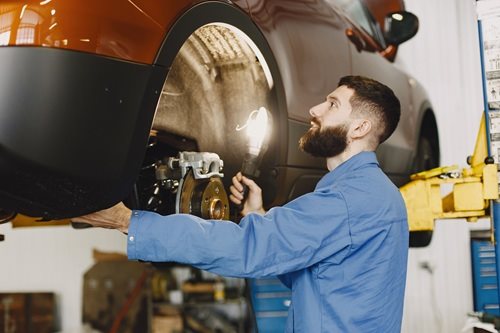
Running a commercial fleet means managing costs at every turn, and brake maintenance is one area where cutting corners almost always ends up being more expensive. For fleet operators in northern New Jersey, scheduling consistent fleet brake inspections in Paramus is both a safety measure and one of the better financial calls you can make. Our team at Chrysler Dodge Jeep of Paramus works directly with commercial operators across Bergen County, and we see the difference proactive inspection makes in long-term repair costs every week.
Brakes absorb enormous stress in commercial operations. Whether your vehicles are working through stop-and-go traffic along Route 4 or hauling heavy loads through Bergen County, brake systems degrade faster than they do in typical passenger vehicles. Catching problems early is the whole game. Wait until something breaks, and you're paying far more than necessary.
Why Preventative Brake Inspections Are Essential for Commercial Fleets in Paramus, New Jersey
Fleet operators in Paramus and the surrounding Bergen County region deal with demanding driving conditions daily. Heavy traffic, constant delivery stops, and the physical weight of commercial loads accelerate brake wear well beyond what standard inspection schedules catch.
Preventative brake inspections give fleet operators control over maintenance timing rather than forcing them to react to breakdowns. When our technicians catch a worn brake pad or early rotor damage during a planned inspection, the repair is straightforward and affordable. When that same issue goes undetected and leads to brake failure on a delivery route, costs multiply quickly across labor, parts, towing, and vehicle downtime, with missed contracts potentially added to the bill.
Schedule a fleet brake inspection before a minor issue becomes a major repair. For businesses that rely on their vehicles every day, proactive brake servicing keeps your fleet moving and your operations predictable.
The Real Cost Comparison: Preventative Inspection vs. Emergency Brake Repair
Regular inspections pay for themselves. Fleets that invest in preventative brake maintenance typically spend significantly less on brake-related costs over time than those relying on reactive repairs. The table below puts the key differences in perspective.
| Scenario | What's Addressed | Vehicle Downtime | Risk of Secondary Damage | Long-Term Cost Implication |
|---|---|---|---|---|
| Preventative Brake Inspection | Worn pads, rotor condition, pushrod stroke, fluid quality | Minimal (scheduled) | Low | Low |
| Emergency Brake Repair | Active component failure, unplanned diagnostic | Moderate to significant | Moderate | Moderate |
| Catastrophic Brake Failure | Rotor, caliper, suspension, and tire damage | Severe | High | Severe |
| DOT Out-of-Service Violation | Forced removal from service, required repairs before return | Immediate and extended | Moderate to high | Severe |
Planned maintenance means parts and labor on your timeline, at standard rates, with no urgency premium. Emergency repairs often involve expedited service, additional diagnostic time, and a vehicle sitting idle. A consistent inspection schedule also lets fleet operators budget more accurately rather than absorbing unpredictable emergency costs throughout the year.
Common Brake Problems Found in Commercial Fleet Vehicles
Not all commercial vehicles experience brake wear the same way. The type of work a vehicle performs determines which components come under the most stress.
Delivery Vans: Load Stress and Heat Glazing
Delivery vans spend their days in a continuous cycle of loading, stopping, and accelerating. That repetitive pattern generates heat that wears pads unevenly, glazes rotors, and degrades brake fluid through repeated thermal cycling.
Our technicians also frequently find stuck automatic slack adjusters and out-of-adjustment brakes on high-cycle delivery vehicles. Catching these conditions during a scheduled inspection means replacing components at the right time, before they've caused secondary damage.
Contractor Trucks: Heavy Hauling and System Strain
Trucks used for construction and contracting work face heavy-payload demands and constant shifts between loaded and unloaded configurations. Out-of-adjustment brakes and worn pushrod stroke are common findings on contractor trucks.
Brake fade, where stopping power decreases under sustained heavy use, becomes a real concern when trucks regularly haul at or near capacity. Regular inspections identify these risks before they become safety issues or DOT violations.
High-Mileage Commercial Vehicles
High-mileage vehicles accumulate wear across every component. Cracked hoses, corroded air components, inoperative emergency brakes, and excessive pushrod stroke are more common in vehicles with significant miles behind them. Fleet operators running older vehicles or high-mileage routes through communities like Hackensack, Teaneck, Clifton, and Fort Lee should prioritize brake system evaluation for these units.
DOT Compliance and New Jersey Fleet Safety Requirements
Fleet operators in New Jersey work under clear regulatory obligations, and brake system maintenance sits at the center of DOT and FMCSA compliance. Federal FMCSA rules require an annual inspection for commercial vehicles over 10,001 lbs GVWR under 49 CFR 396.17, and New Jersey enforces those standards through State Police roadside inspections and weigh stations. On top of the inspection itself, federal rules add documentation, hours-of-service, and recordkeeping requirements.
The compliance stakes are real and specific:
-
An expired or missing annual inspection is an automatic out-of-service order at any roadside stop or weigh station.
-
Inspection and repair records must be specific, dated, and signed, with the annual inspection report retained for 14 months.
-
Brake adjustment must be within specification, since pushrod stroke beyond the readjustment limit is an out-of-service condition.
-
During roadside inspections, inspectors check brake adjustment and stroke length, air system integrity, emergency brake functionality, brake chamber and lining condition, and connecting components.
A documented history of regular brake inspections demonstrates due diligence and supports your compliance record. Staying ahead of these requirements through scheduled inspections is far less disruptive than addressing violations after the fact.
Our commercial fleet services are built around helping operators meet these standards efficiently, with proper documentation included.
Warning Signs Fleet Operators Should Monitor Immediately
Between scheduled inspections, drivers and fleet operators need to stay alert to symptoms that point to brake system issues. Acting quickly prevents minor problems from compounding into serious failures.
Watch for these warning signs and pull the vehicle for inspection if any appear:
-
Extended stopping distance or noticeably reduced brake responsiveness.
-
Brake pulling to one side, indicating uneven wear or a sticking caliper.
-
Grinding or squealing noise during braking (grinding signals metal-on-metal contact actively damaging rotors).
-
Air system hissing, which may indicate a leak in the brake circuit.
-
Pushrod stroke exceeding specified limits.
-
Soft or spongy brake pedal feel, pointing to hydraulic system issues.
-
Dashboard brake warning lights that remain illuminated.
Any driver reporting these symptoms should have their vehicle scheduled for inspection immediately rather than continuing on route.
How Scheduled Brake Inspections Improve Fleet Uptime and Long-Term Productivity
Fleet productivity ultimately comes down to how many vehicles are available and operational on any given day. Every unplanned repair represents a vehicle removed from service at the worst possible time, typically in the middle of active operations when demand is highest.
Scheduled fleet brake inspections convert reactive maintenance into planned maintenance. When we inspect brake systems on a regular cycle, we identify components approaching end-of-life and replace them during a scheduled service window rather than in response to an emergency. Scheduled maintenance means repairs happen on your terms, around your operation's needs, rather than at the mercy of a roadside breakdown.
Over a full year of operations, this approach compounds. Fewer emergency repairs mean fewer surprise costs, vehicles stay in service longer between major overhauls, and driver confidence improves when the fleet they're operating is consistently maintained.
Fleet Operator Brake Maintenance Checklist
Use this checklist to build a prevention-focused brake maintenance protocol across your operation:
-
Check pushrod stroke during pre-trip inspections on air-brake vehicles.
-
Train drivers to recognize and immediately report all warning signs listed above.
-
Verify brake adjustment in every PM service interval.
-
Replace worn pads and rotors proactively rather than waiting for failure indicators.
-
Inspect automatic slack adjusters for proper function at each scheduled service.
-
Confirm air system integrity on all air-brake commercial vehicles.
-
Keep all repair orders specific, dated, and signed to satisfy DOT documentation requirements.
-
Schedule annual inspections before expiration to stay compliant at New Jersey weigh stations.
Schedule a Fleet Brake Inspection at Chrysler Dodge Jeep of Paramus
Don't wait for a brake failure to cost you time, money, and compliance standing. Our service department at Chrysler Dodge Jeep of Paramus handles high daily volumes of commercial fleet maintenance, giving us the throughput and scheduling capacity to keep your vehicles moving with minimal disruption. You'll find us at 315 Route 4 West, Paramus, NJ 07652, with service hours Monday through Friday from 7:30 AM to 6 PM and Saturday from 7:30 AM to 3 PM.
Why fleet operators across Bergen County choose us:
-
Larger service department built for fleet capacity and fast turnaround.
-
Certified technicians experienced with delivery vans, contractor trucks, Ram commercial vehicles, and high-mileage fleet units.
-
Genuine MOPAR parts that meet manufacturer specifications for Chrysler, Dodge, Jeep, and Ram vehicles.
Schedule your fleet brake inspection today and get your vehicles compliant, safe, and road-ready.
Photo of Professional mechanic in blue coveralls inspecting car brakes in a well-lit garage. by Gustavo Fring is licensed with Pexels License.